

Meal planning helps save time, reduce stress, and promote healthy eating. It involves organizing meals for a week or month in advance.
Meal planning is an essential strategy for maintaining a balanced diet and simplifying daily routines. By planning meals ahead, you can ensure a variety of nutrients in your diet and avoid last-minute unhealthy choices. Start by listing your favorite meals and considering any dietary restrictions or goals.
Create a shopping list based on your planned meals to streamline grocery trips and reduce food waste. Consistency in meal planning can lead to better eating habits and improved overall health. Keep your plan flexible to accommodate unexpected changes and enjoy the benefits of a well-organized approach to eating.
Introduction To Meal Planning
Meal planning is a simple way to organize meals for the week. It helps you save time, money, and eat healthier. By planning your meals, you can avoid last-minute takeout or unhealthy snacks. This guide will help you understand the basics of meal planning and how to get started.
Benefits Of Meal Planning
Meal planning offers many benefits that improve your lifestyle:
- Save Time: Plan once, cook once, eat all week.
- Save Money: Buy only what you need, reduce food waste.
- Eat Healthier: Choose nutritious meals in advance.
- Reduce Stress: Know what’s for dinner each night.
By planning your meals, you gain control over your diet and budget. This leads to a healthier, happier life.
Common Meal Planning Myths
Many people think meal planning is difficult. Let’s debunk some common myths:
| Myth | Reality |
|---|---|
| Meal planning takes too much time. | It saves time in the long run. |
| Meal planning is only for large families. | It’s great for individuals too. |
| Meal planning limits creativity. | It encourages trying new recipes. |
Don’t let these myths stop you from starting. Meal planning is for everyone and can be simple and fun.
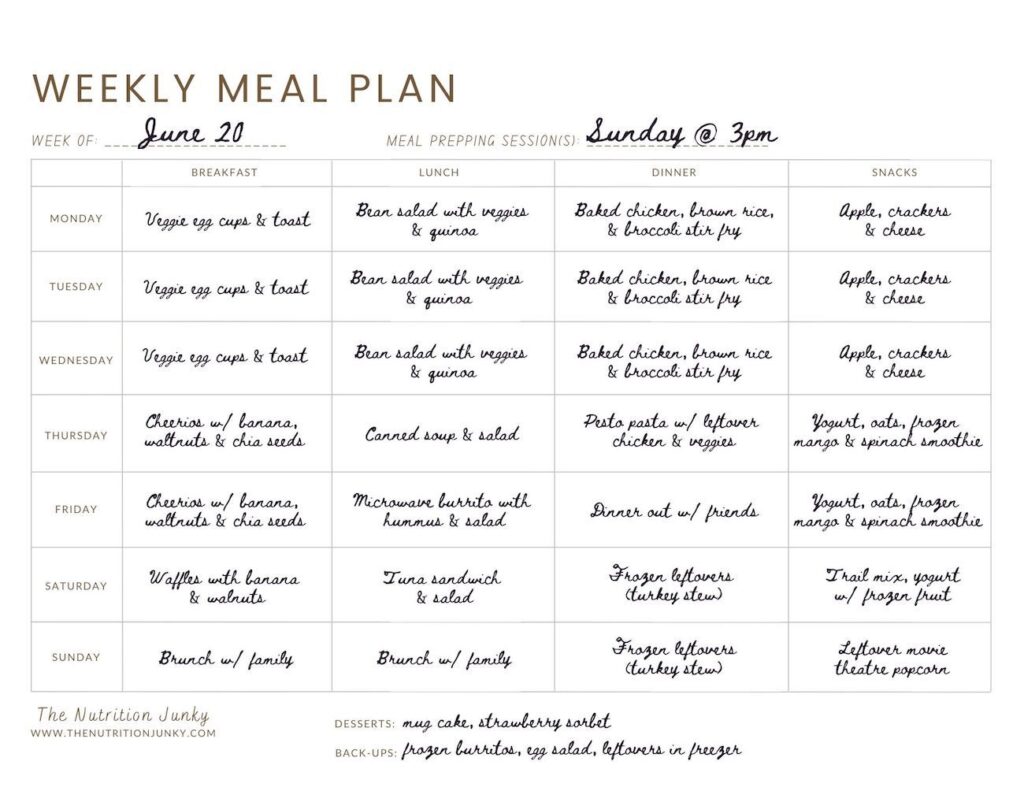
Credit: thenutritionjunky.com
Getting Started
Starting meal planning can seem daunting. But with a clear plan, it becomes manageable. This guide will help you begin your meal planning journey step-by-step.
Assess Your Needs
Before diving into meal planning, it’s essential to assess your needs. Consider the following:
- How many people are you cooking for?
- Are there any dietary restrictions?
- What are your cooking skills?
- How much time do you have for meal prep?
Knowing these details helps tailor your plan to your lifestyle. It ensures you can stick to it without feeling overwhelmed.
Set Realistic Goals
Next, it’s crucial to set realistic goals for your meal planning. Start small and gradually increase your efforts:
- Begin with planning one meal per day.
- Gradually include more meals as you become comfortable.
- Set achievable targets, like preparing meals in 30 minutes.
Setting small, realistic goals helps build confidence. It also ensures you can maintain the plan long-term.
Here’s a simple table to help you get started:
| Goal | Action |
|---|---|
| Plan One Meal | Select a simple recipe |
| Increase Meal Count | Add another meal each week |
| Time Management | Prepare meals in 30 minutes |
By following these steps, you’ll set yourself up for success in meal planning. You’ll find it easier to stick to your plan and enjoy the benefits of healthy, home-cooked meals.
Tools And Resources
Planning meals can be enjoyable with the right tools and resources. Using the best gadgets and apps can save time and reduce stress. Let’s explore some essential kitchen tools and useful apps and websites.
Essential Kitchen Tools
Having the right kitchen tools makes meal planning easier. Here are some must-have items:
- Knife Set: A quality knife set is crucial for chopping and slicing.
- Measuring Cups and Spoons: Precise measurements ensure your recipes turn out perfect.
- Cutting Boards: Use separate boards for meat and vegetables to avoid cross-contamination.
- Slow Cooker: Perfect for cooking meals while you are busy with other tasks.
- Storage Containers: Keep your prepped meals fresh and organized with airtight containers.
Useful Apps And Websites
These apps and websites can simplify your meal planning process:
| App/Website | Features |
|---|---|
| Mealime | Personalized meal plans, easy recipes, and grocery lists. |
| Yummly | Recipes tailored to your tastes and dietary needs. |
| Plan to Eat | Drag-and-drop meal planner and recipe organizer. |
| Prepear | Save recipes, create meal plans, and shop for groceries. |
By using these tools and resources, meal planning can become a fun and efficient activity. Start using them today to make your meal planning process smoother and more enjoyable.
Creating Your Meal Plan
Creating a meal plan can save time and reduce stress. It ensures you eat healthy and balanced meals. Here, you’ll learn how to choose recipes and balance nutrition. Let’s get started!
Choosing Recipes
Select recipes that fit your taste and lifestyle. Choose recipes with simple ingredients. This makes cooking easier and faster. Look for recipes that are quick to prepare. Busy schedules need quick meals.
Consider the following points when choosing recipes:
- Prep Time: How long does it take to prepare?
- Ingredients: Do you have all the ingredients?
- Difficulty Level: Is the recipe easy to follow?
- Servings: Does it make enough for your family?
Using these points, you can pick the best recipes for your meal plan.
Balancing Nutrition
A balanced meal plan includes all food groups. Include fruits, vegetables, proteins, and grains. Aim to eat a variety of foods. This ensures you get all needed nutrients.
Here is a simple table to help balance your meals:
| Food Group | Examples | Recommended Portion |
|---|---|---|
| Fruits | Apples, Bananas, Berries | 1-2 servings per meal |
| Vegetables | Carrots, Broccoli, Spinach | 2-3 servings per meal |
| Proteins | Chicken, Beans, Eggs | 1 serving per meal |
| Grains | Rice, Oats, Bread | 1-2 servings per meal |
Follow this table to ensure balanced nutrition. Eating balanced meals helps you stay healthy and energized. Plan your meals with care and enjoy a variety of foods!
Shopping Strategies
Meal planning can be a game-changer for busy individuals and families. A well-thought-out shopping strategy is essential for effective meal planning. This guide will help you streamline your grocery shopping and make the most of your time and budget.
Making A Shopping List
Creating a shopping list is the first step in organized meal planning. A detailed list ensures you buy only what you need and avoid impulse purchases.
- Categorize items by sections of the store (produce, dairy, meats).
- Check your pantry and fridge to avoid buying duplicates.
- Use a digital app or a notepad to jot down items as you run out.
Smart Grocery Shopping Tips
Shopping smartly helps you save money and time. Here are some tips to make your grocery trips more efficient.
- Shop during off-peak hours to avoid crowds.
- Stick to your list to prevent impulse buying.
- Buy in bulk for non-perishable items like grains and canned goods.
- Compare prices and brands for the best deals.
Here’s a quick comparison table for shopping strategies:
| Strategy | Benefit |
|---|---|
| Shopping List | Reduces impulse purchases |
| Off-Peak Shopping | Saves time |
| Bulk Buying | Saves money |
| Price Comparison | Finds best deals |
Credit: foodheavenmadeeasy.com
Meal Prep Tips
Meal prepping can change your life. It saves time and keeps you healthy. Here are some useful meal prep tips to make your week easier.
Batch Cooking
Batch cooking is cooking large amounts of food at once. This method helps you save time during the week. You can cook once and eat multiple times.
Here are some batch cooking tips:
- Cook enough for several meals.
- Store food in containers.
- Label each container with the date.
| Food Item | Batch Cooking Ideas |
|---|---|
| Chicken | Grill or bake for salads and wraps. |
| Vegetables | Roast a mix for sides or soups. |
| Rice | Cook a large pot for bowls and stir-fries. |
Time-saving Techniques
Using time-saving techniques makes meal prep even easier. These methods help you spend less time in the kitchen.
- Use a slow cooker for easy meals.
- Chop vegetables in advance.
- Utilize frozen vegetables and fruits.
- Prepare breakfast the night before.
These tips help you keep meal prep simple. Saving time in the kitchen lets you focus on other tasks. Happy meal prepping!
Storing And Reheating
Proper storage and reheating are key to effective meal planning. These ensure your meals stay fresh and safe. Follow these tips to maximize the benefits of your meal prep efforts.
Proper Storage Methods
Storing food correctly is crucial for maintaining its freshness and flavor. Here are some methods to help you:
- Use airtight containers: These prevent air and moisture from spoiling your food.
- Label your containers: Write the date and contents on each container.
- Store in the right place: Keep perishable items in the refrigerator or freezer.
| Food Type | Storage Duration |
|---|---|
| Fruits and Vegetables | Up to 5 days in the fridge |
| Cooked Meats | 3-4 days in the fridge |
| Grains and Pasta | 1 week in the fridge |
Reheating Tips
Reheating food correctly preserves its taste and texture. Follow these tips to reheat your meals safely:
- Use a microwave-safe dish: Ensure your container is microwave-safe to avoid accidents.
- Cover your food: This helps to retain moisture and heat evenly.
- Stir halfway: Stir your food halfway through reheating to ensure even heating.
Maintaining proper storage and reheating practices helps you enjoy your meals. Keep these tips in mind for safe and delicious meal planning.
Troubleshooting
Meal planning can be tricky sometimes. Mistakes and motivational slumps are common. But don’t worry! This troubleshooting guide will help you avoid pitfalls and stay on track.
Avoiding Common Mistakes
Many people make simple mistakes in meal planning. Here are some common errors and how to avoid them:
- Overcomplicating Recipes: Stick to easy recipes. Complicated meals can be stressful.
- Ignoring Your Schedule: Plan meals around your busy days. Use quick recipes on those days.
- Not Using Leftovers: Save time and money by planning to use leftovers.
- Skipping Snacks: Plan healthy snacks to avoid unhealthy choices.
Staying Motivated
Keeping motivated with meal planning is crucial. Here are some tips to keep your spirits high:
- Set Realistic Goals: Start with small goals. Achieving them feels great and keeps you going.
- Reward Yourself: Treat yourself for sticking to the plan. Rewards can be simple, like a movie night.
- Track Your Progress: Keep a journal of your meals. Seeing progress boosts motivation.
- Get Support: Involve family or friends. Sharing the journey makes it more enjoyable.
| Common Mistakes | Solutions |
|---|---|
| Overcomplicating Recipes | Stick to easy recipes |
| Ignoring Your Schedule | Plan around busy days |
| Not Using Leftovers | Plan to use leftovers |
| Skipping Snacks | Plan healthy snacks |
Credit: ivaluefood.com
Frequently Asked Questions
What Are The 5 Rules In Planning Meals?
1. Balance nutrition by including protein, carbohydrates, and healthy fats. 2. Incorporate a variety of fruits and vegetables. 3. Control portion sizes to avoid overeating. 4. Plan meals according to your budget. 5. Consider dietary restrictions and preferences.
What Are The 5 Principles Of Meal Planning?
The 5 principles of meal planning are balance, variety, moderation, portion control, and nutritional adequacy. Balance different food groups, ensure variety to get all nutrients, eat in moderation, control portion sizes, and meet nutritional needs.
What Are The 5 Basic Steps Of Meal Planning?
The 5 basic steps of meal planning are: 1. Assess your dietary needs and preferences. 2. Create a weekly meal schedule. 3. Make a detailed grocery list. 4. Shop for ingredients. 5. Prepare and cook meals in advance.
What Is The 80 20 Rule Meal Plans?
The 80 20 rule meal plan involves eating healthy, nutrient-dense foods 80% of the time and indulging in treats 20% of the time.
Conclusion
Mastering meal planning can simplify your life and boost your health. Save time, reduce stress, and eat better. Start small, and gradually build your skills. Consistency is key, and soon it will become second nature. Enjoy the benefits of organized, nutritious meals every day.
Happy meal planning!